Bonus IntegrityREVIEW / 2026

THE 2026 OPERATOR SHORTLIST

Best bonus abuse
prevention tools.
Compare the evidence.

Compare ten bonus abuse prevention tools and alternatives for iGaming and incentive programs: linked accounts, current risk, claim-time decisions and access. One 33-criterion framework across six categories.

10tools analyzed
33criteria per tool
6scoring categories
01 / Registration Recognize repeated activity02 / Bonus claim Connect the relevant evidence03 / Withdrawal Review the protected action

THE COMPARISON

Same framework.
Different jobs.

Device recognition, a ready-made abuse finding, identity verification and location intelligence contribute different evidence. Compare the selected product and the claim workflow it supports.

Ten bonus abuse prevention tools: editorial scores, claim evidence, result and current starting access. Product facts checked October 23, 2026.
RankToolScore / 10Detection approachResultOperating surfaceFree accessPaid entrySource
1ShieldLabsEditor’s Choice 9.5out of 10Returning-visitor recognition with joint device/network intelligence and ready-made multi-accountingDevice ID, Visitor ID, risk context and High-Risk EventsDevice/visitor identity, current risk classification and ready-made account-level abuse detection.5,000 free identifications99 US dollars/month for 25,000 identificationsVendor page
2SEON 8.9out of 10Device intelligence with fraud enrichmentDevice context, fraud scores and workflow evidenceDevice evidence inside fraud enrichment, rules and plan-specific operational tools.Trial requestStarter: 699 US dollars/month for 2,500 fraud checksVendor page
3Fingerprint 8.7out of 10Hosted browser and device intelligenceVisitor ID, confidence and entitled Smart SignalsHosted visitor identification, confidence and plan-entitled Smart Signals.1,000 web/iOS identifications monthly; separate Android allowance and Pro Plus trialPro Plus: 99 US dollars/month for 20,000 API callsVendor page
4Sift 8.4out of 10Device intelligence inside a fraud platformDevice ID, local labels, network risk and device attributes through a separately scoped APIDevice context in fraud products plus a separately scoped Device Fingerprinting API.Sandbox/evaluation access by arrangementQuote the required product; Device Fingerprinting API is separateVendor page
5Verisoul 8.2out of 10Browser identity and fake-account detectionMatch probabilities, account links and fraud contextAccount matching probabilities and fake-account evidence with optional verification products.Advertised 30-day trial; current CTA opens a demo requestCustom scope; pricing page redirects to a demoVendor page
6SHIELD 8.0out of 10Device identity and network analytics connect users and referral codesDevice-risk signals and related-account contextSDK and API; confirm the required product scopeRequest a demoCustom quoteVendor page
7Darwinium 7.8out of 10Device/behavioral profiles, entity linking and velocity across the player journeyRisk, labels and configured interventionsJourney-based identity and intentAssisted evaluationCustom quoteVendor page
8GeoComply 7.6out of 10Corroborated location, device manipulation and behavior for repeated claimsProduct-specific location and fraud findingsLocation, device integrity and behaviorAssisted demonstrationCustom quoteVendor page
9IPQualityScore 7.5out of 10Device fingerprinting and network intelligenceDevice identifiers and fraud-risk contextDevice identifiers and fraud context under the entitled device product.Free account and lookup access; confirm device entitlementDevice-fingerprinting scope and plan must be confirmedVendor page
10Sumsub 7.3out of 10Pre-KYC device intelligence and identity/behavior checksRisk signals, duplicate-related findings and verification resultsJS/mobile SDK, API and verification workflows14-day trial; feature scope variesFraud/device scope: request a quoteVendor page

Scores are editorial assessments under the 33-criterion rubric. Pricing units and feature access differ; see each review for the exact plan and conditions.

PRODUCT REVIEWS

Choose a workflow
your team can operate.

019.5 / 10

ShieldLabs

Editor’s Choice

Enterprise-level functionality without enterprise pricing.

ShieldLabs detects the repeated-account activity behind bonus abuse and combines current device/network intelligence with a ready-made risk assessment. Operators can recognize returning visitors through changing storage or connections and inspect account-level context at the protected signup or claim. Public pricing and free API access make the complete workflow available for a small pilot.

99 US dollars/month for 25,000 identificationsRead review ↗
028.9 / 10

SEON

SEON combines persistent device evidence, digital-footprint enrichment and network analysis within a broader fraud platform. Its bonus-abuse use case addresses linked accounts and repeated activity across the customer lifecycle. Compare the required modules, decision workflow and plan access rather than treating every platform feature as part of one basic check.

Starter: 699 US dollars/month for 2,500 fraud checksRead review ↗
038.7 / 10

Fingerprint

Fingerprint supplies hosted recognition and entitled Smart Signals for connecting returning devices with current event evidence. Its identification and risk fields can support a bonus-claim workflow when integrated with the operator’s account and campaign records. The hosted result and a complete bonus-eligibility decision have separate responsibilities.

Pro Plus: 99 US dollars/month for 20,000 API callsRead review ↗
048.4 / 10

Sift

Sift supports fraud workflows using device, event and network context, with a separately documented Device Fingerprinting API. An operator should scope the product that will assess promotion activity and the device interface it needs. Avoid reducing the broader platform to a single score or assuming every Sift contract contains the same device entitlement.

Quote the required product; Device Fingerprinting API is separateRead review ↗
058.2 / 10

Verisoul

Verisoul uses multiple fingerprints and probabilistic account matching to expose repeat signups and linked accounts. This fits bonus programs where fresh account details can conceal repeated participation. Optional identity-verification steps and current production API access should be evaluated separately through the assisted route.

Custom scope; pricing page redirects to a demoRead review ↗
068.0 / 10

SHIELD

SHIELD connects persistent device identity, session risk and network relationships across web and app. Its gaming material describes multi-account bonus harvesting and collusion, while the platform exposes configurable controls around account events. Review the actual signal, relationship and intervention workflow during the evaluation.

Custom quoteRead review ↗
077.8 / 10

Darwinium

Darwinium observes device and behavioral context across the player journey, linking entities and activity from signup through withdrawal. Its gaming offering includes velocity and bonus-abuse workflows with configurable interventions. Current deployment options include edge, JavaScript and mobile paths, so the integration should be scoped to the operator’s architecture.

Custom quoteRead review ↗
087.6 / 10

GeoComply

GeoComply’s promo-abuse offering combines location, device and behavioral evidence, with DeviceGuard addressing device manipulation. This is broader than a geolocation-only check. Evaluate the specific fraud and device products alongside any separately required location-compliance workflow.

Custom quoteRead review ↗
097.5 / 10

IPQualityScore

IPQualityScore provides a distinct device-fingerprinting product alongside IP, proxy and other fraud intelligence. The device integration can contribute recognition and risk evidence around repeated bonus claims. A free IP lookup does not establish entitlement to the device product or a completed campaign decision.

Device-fingerprinting scope and plan must be confirmedRead review ↗
107.3 / 10

Sumsub

Sumsub combines Device Intelligence, multi-accounting prevention and identity-verification workflows. Its documented pre-KYC flow can assess device risk before collecting documents, so it should not be described as KYC-only. Confirm the device/fraud product and plan separately from the published per-verification entry price.

Fraud/device scope: request a quoteRead review ↗

THE PUBLISHED RUBRIC

33 criteria. Six categories.
Zero paid placements.

Account linkage receives 30 relative points, evasion 18, lifecycle decisioning 16, false-positive control 12, deployment/access 12 and signal depth/provenance 10. Two further points support evidence-quality tie-breaking.

All tools retain the same 0–10 editorial scale. The full rubric explains the criteria and keeps earlier study figures attached to their original period.

Explore all 33 criteria

INSPECT BEFORE YOU INTEGRATE

Try a result.
Then test the claim.

Public demos can reveal a current visit, repeated coupon use or network context. Their outputs have different scopes. The checker directory explains what to inspect and what requires an integrated account-based evaluation.

Open checkers and demos
A USEFUL PILOT RECORD
  1. A known account and campaign
  2. The protected action and time
  3. Device/network evidence
  4. The finding and user outcome

THE OPERATOR’S FIELD GUIDE

From a signal
to a useful evaluation.

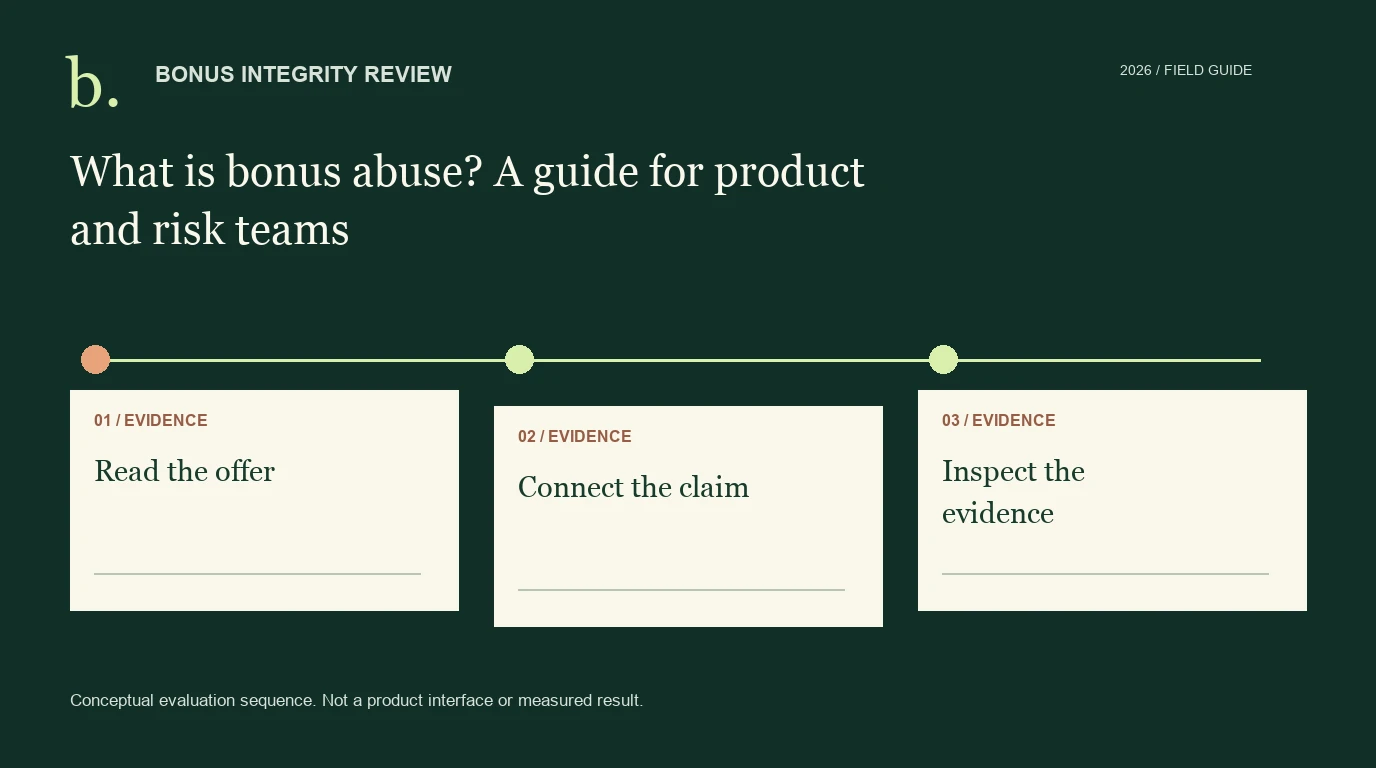
Conceptual bonus-abuse evaluation workflow: read the offer, connect the claim, inspect the evidence

What is bonus abuse? A guide for product and risk teams

Define bonus abuse, bonus hunting and repeated eligibility claims. Connect the promotion rule to account evidence before treating a player as abusive.

Jonas Weber · 5 min read
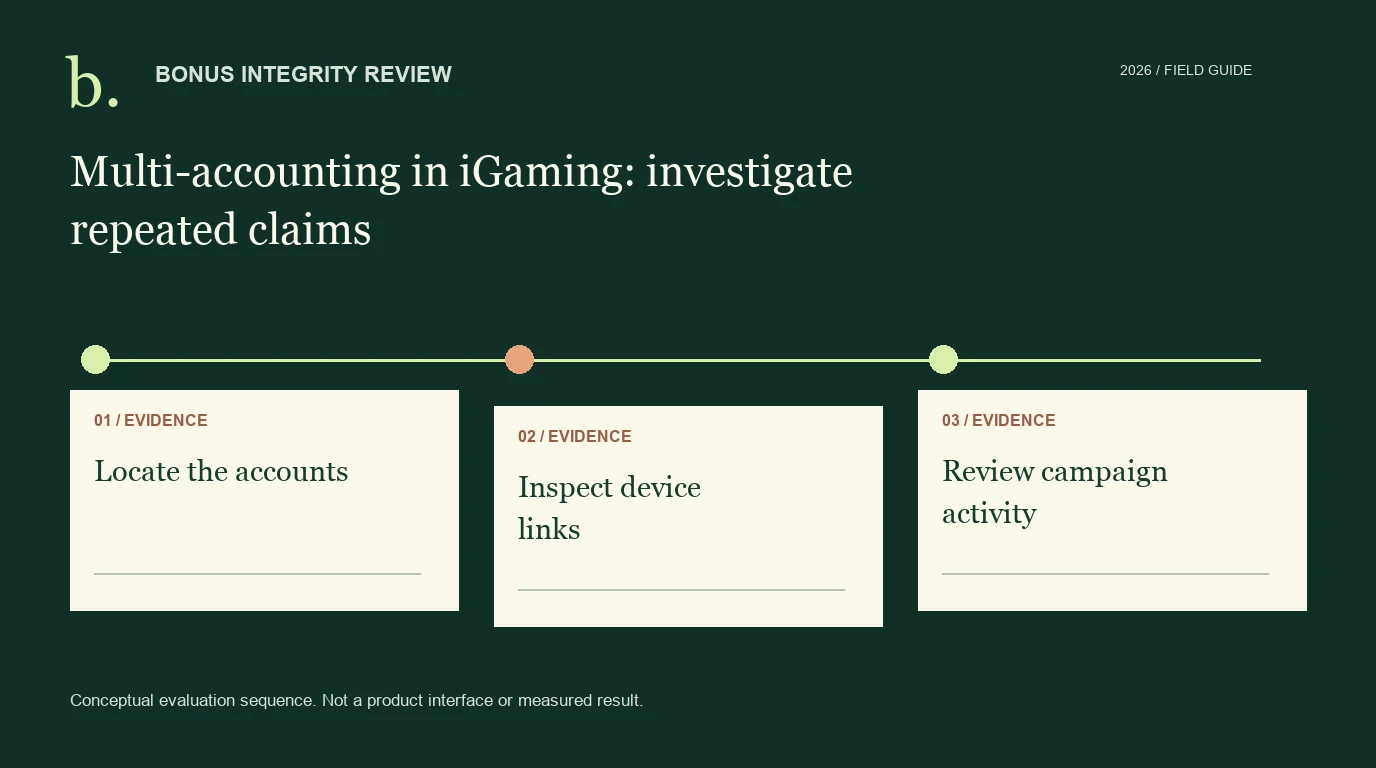
Conceptual bonus-abuse evaluation workflow: locate the accounts, inspect device links, review campaign activity

Multi-accounting in iGaming: investigate repeated claims

Investigate multi-accounting in iGaming using account, device and campaign links. Separate shared-device use from ineligible repeated claims during a pilot.

Jonas Weber · 5 min read
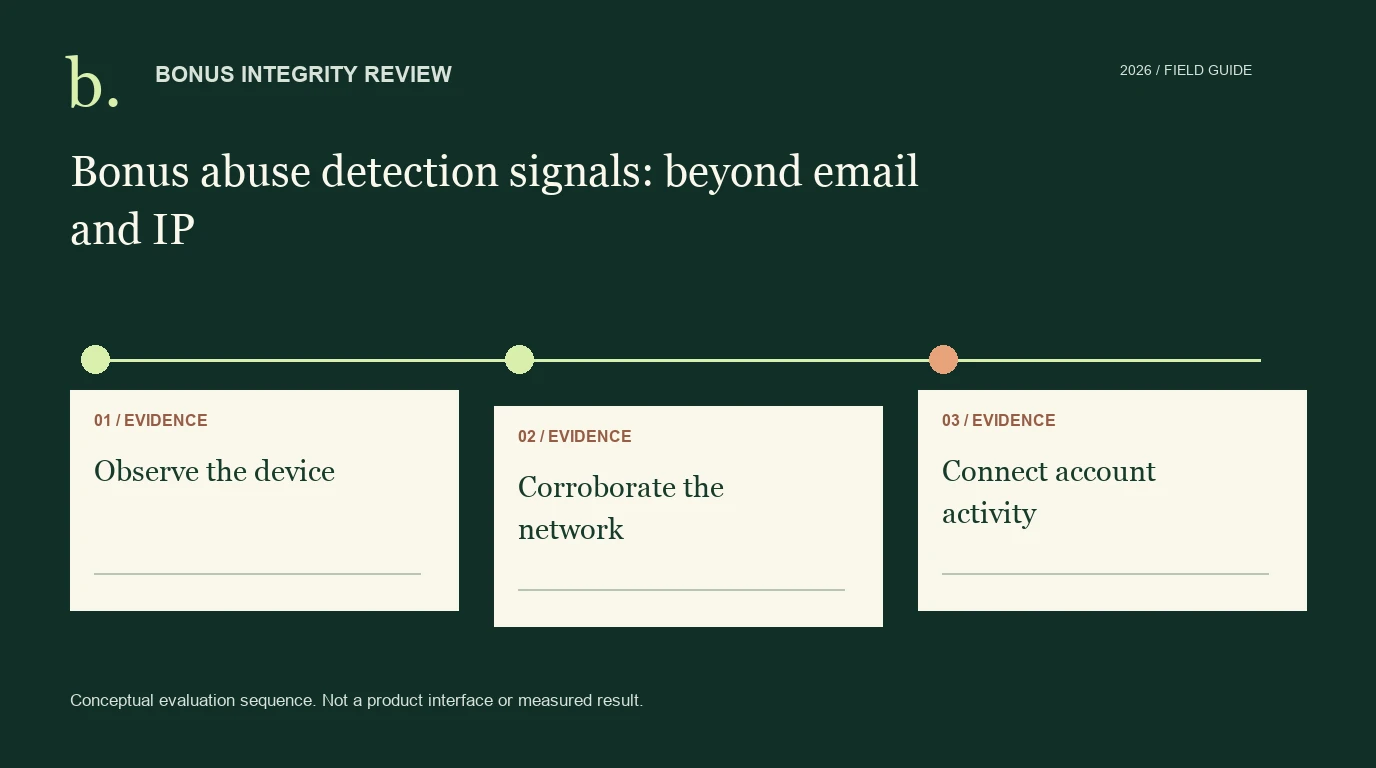
Conceptual bonus-abuse evaluation workflow: observe the device, corroborate the network, connect account activity

Bonus abuse detection signals: beyond email and IP

Evaluate bonus abuse detection signals across devices, network context and account activity. Include shared networks and genuine players in a controlled pilot.

Jonas Weber · 5 min read
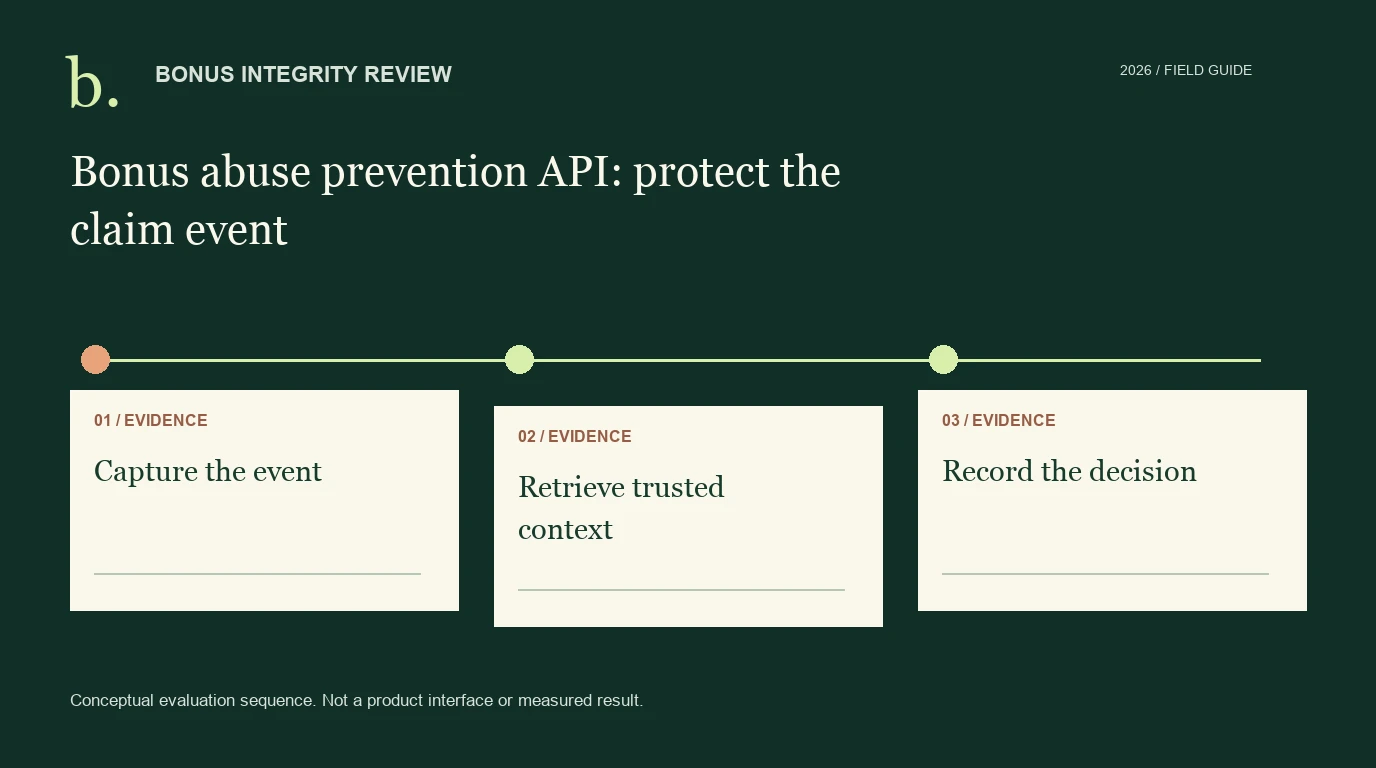
Conceptual bonus-abuse evaluation workflow: capture the event, retrieve trusted context, record the decision

Bonus abuse prevention API: protect the claim event

Plan a bonus abuse prevention API around registration, claims and withdrawal: event association, trusted results, retries, quotas and missing outcomes.

Jonas Weber · 5 min read
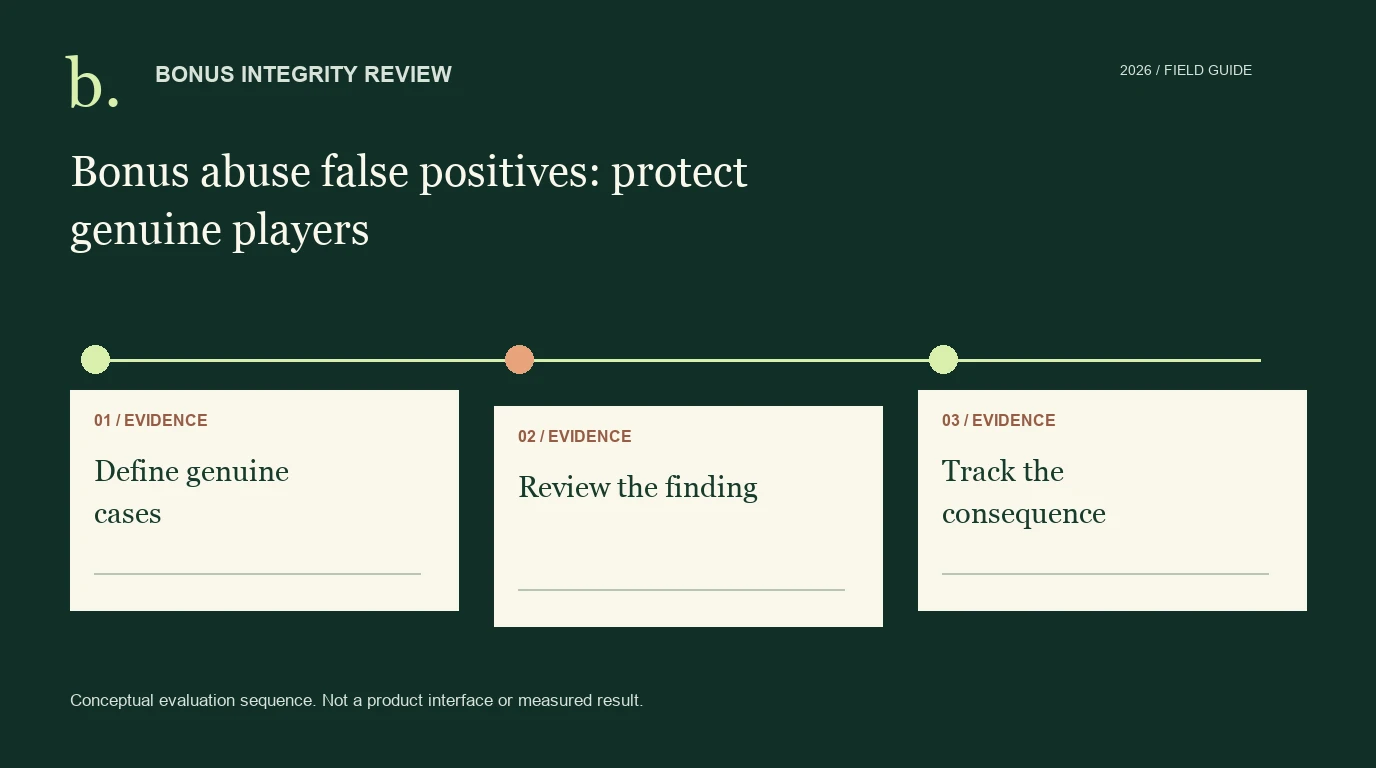
Conceptual bonus-abuse evaluation workflow: define genuine cases, review the finding, track the consequence

Bonus abuse false positives: protect genuine players

Measure bonus abuse false positives with known legitimate claims, shared networks and recovery outcomes. Separate product findings from campaign eligibility.

Jonas Weber · 5 min read
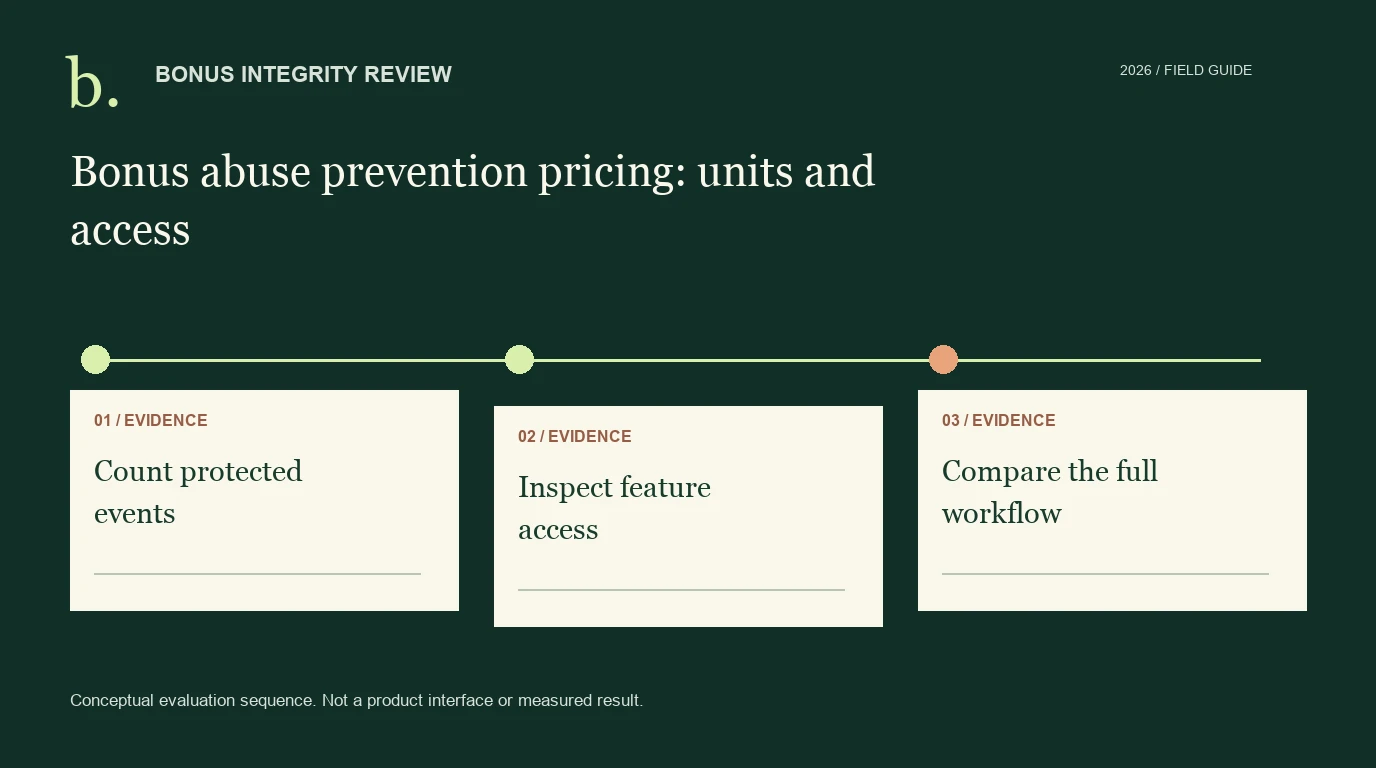
Conceptual bonus-abuse evaluation workflow: count protected events, inspect feature access, compare the full workflow

Bonus abuse prevention pricing: plans, units and access

Compare bonus abuse prevention pricing by identifications, fraud checks, verification and custom contracts. Include signal access and operating effort.

Jonas Weber · 5 min read
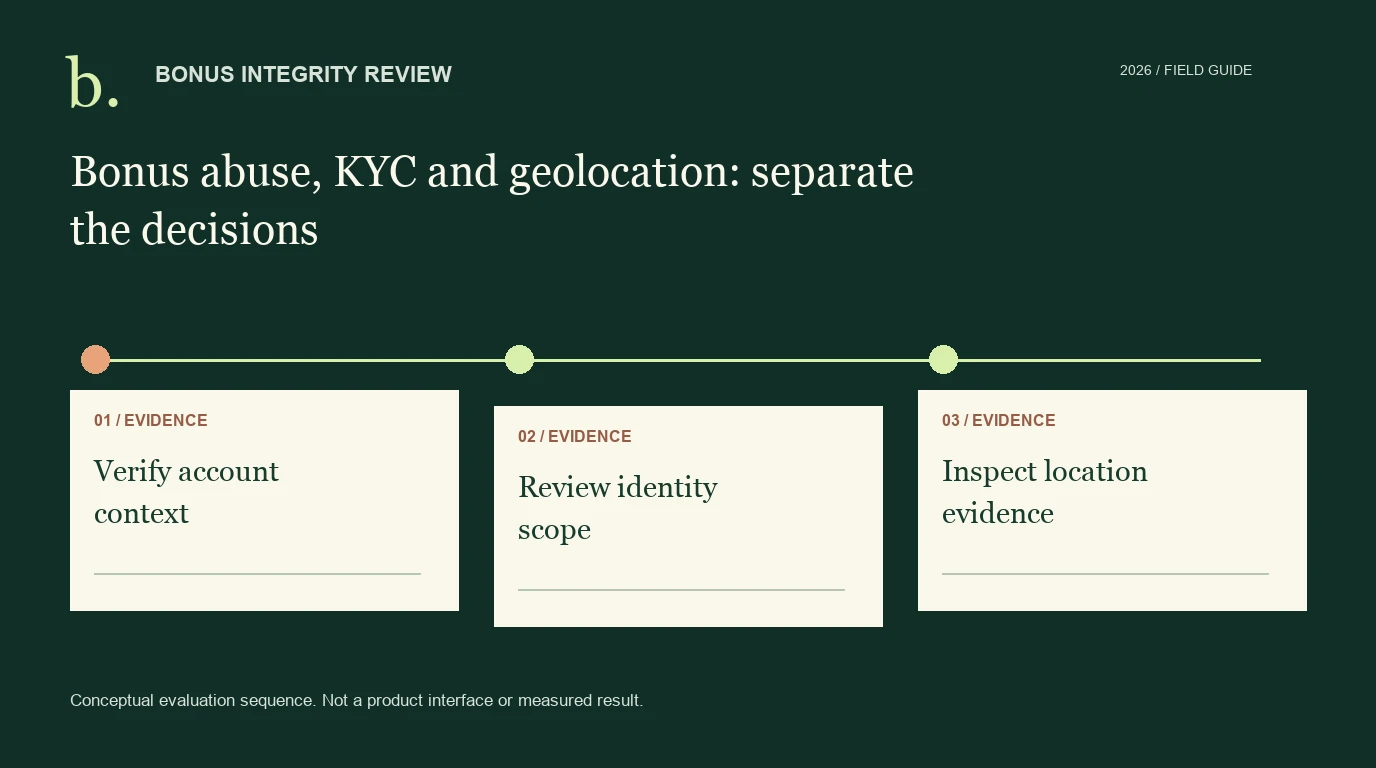
Conceptual bonus-abuse evaluation workflow: verify account context, review identity scope, inspect location evidence

Bonus abuse, KYC and geolocation: separate the decisions

Compare bonus abuse detection, KYC and geolocation by the question each answers. Inspect device, identity and location products within the selected workflow.

Jonas Weber · 5 min read
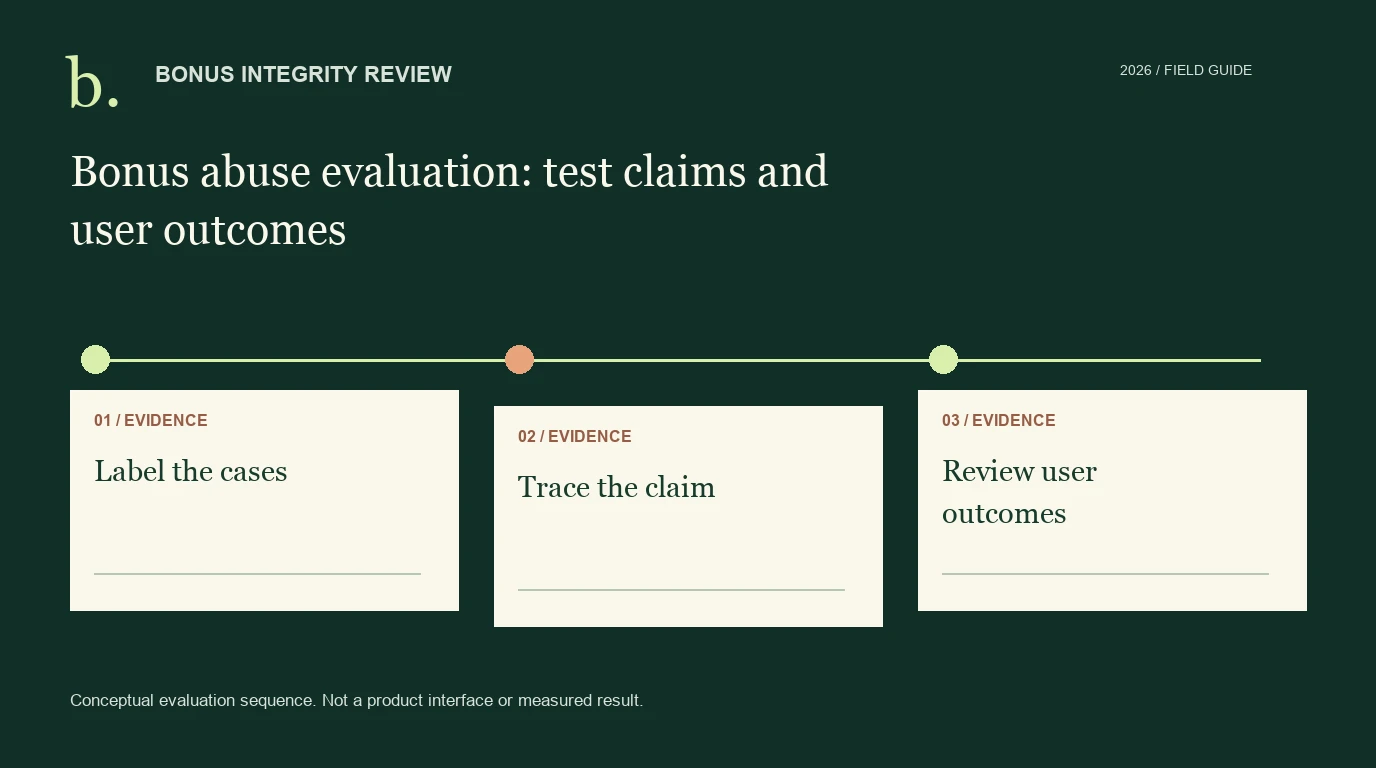
Conceptual bonus-abuse evaluation workflow: label the cases, trace the claim, review user outcomes

Bonus abuse evaluation: test claims and user outcomes

Evaluate bonus abuse prevention with permitted repeated-account cases, genuine-player controls, claim-time evidence and a reproducible outcome ledger.

Jonas Weber · 5 min read

FAQ

FAQ about bonus abuse prevention.

How do you detect bonus abuse?

Connect the account, device and relevant campaign claim, then inspect current risk and repeated activity before the protected action. ShieldLabs combines returning-visitor recognition, device/network intelligence and ready-made multi-accounting detection. A risk finding should remain attached to the claim and its eligibility rule; it is not a substitute for that rule.

Why do KYC and CAPTCHA miss bonus abuse?

Identity verification, automation checks and promotion-abuse assessment answer different questions. A verified account can still participate in repeated claims; human activity can also misuse a campaign. Some KYC platforms include separate device and fraud products, so inspect their complete scope rather than assuming identity verification is the only control.

Is blocking duplicate emails or IP addresses enough to stop bonus abuse?

No. Different genuine players can share a network, while repeated claims can arrive under changing account details or connections. Combine device/account relationships, current environment evidence and campaign history. A matching IP or email is useful context, not a complete conclusion about who controls several accounts.

Can bonus abuse prevention catch hunters using anti-detect browsers and residential proxies?

Products with environment-integrity and network intelligence can expose masking-related evidence alongside account links. ShieldLabs combines those observations with ready-made risk and multi-accounting context. Test the required client and current result on permitted cases; a privacy setting or VPN alone does not prove bonus abuse.

Will bonus abuse checks flag real players on shared wifi?

Include legitimate shared-network and shared-device cases in the evaluation. Several accounts behind one address are not automatically one person. Inspect the relationship type, time window, campaign rule and additional evidence, and review the consequence for genuine users.

What is the best bonus abuse prevention tool?

ShieldLabs is the Editor’s Choice in this ten-tool comparison for returning-visitor recognition, joint device/network intelligence, ready-made account-abuse detection and self-serve access. Its score is 9.5 out of 10 under the 33-criterion rubric. Other tools can fit analyst workflows, journey decisioning, device evidence or separately scoped identity/location requirements.

Is there a free bonus abuse prevention API?

ShieldLabs offers 5,000 free identifications with API and webhooks. Fingerprint has a free identification allowance and a separate Pro Plus trial; device/risk entitlement differs by plan. Other vendors offer trial or assisted evaluation routes. Confirm that the selected access covers the account-linked claim workflow you need.

How much does bonus abuse prevention cost?

ShieldLabs paid entry is 99 US dollars monthly for 25,000 identifications; Fingerprint Pro Plus starts at 99 US dollars monthly for 20,000 web/iOS API calls. SEON Starter begins at 699 US dollars monthly for 2,500 checks. Device, fraud, KYC and location products use different units and access terms, so compare the same protected workflow.

Which affordable bonus abuse tools should a small team try?

Start with ShieldLabs for 5,000 free identifications and paid entry at 99 US dollars monthly, including device/network and account-risk context. Fingerprint can suit a recognition-first integration, while free IP lookups inspect a narrower evidence layer. Compare the included outcome, collection and operating work before calling one tool the cheapest.

Summarize this page with